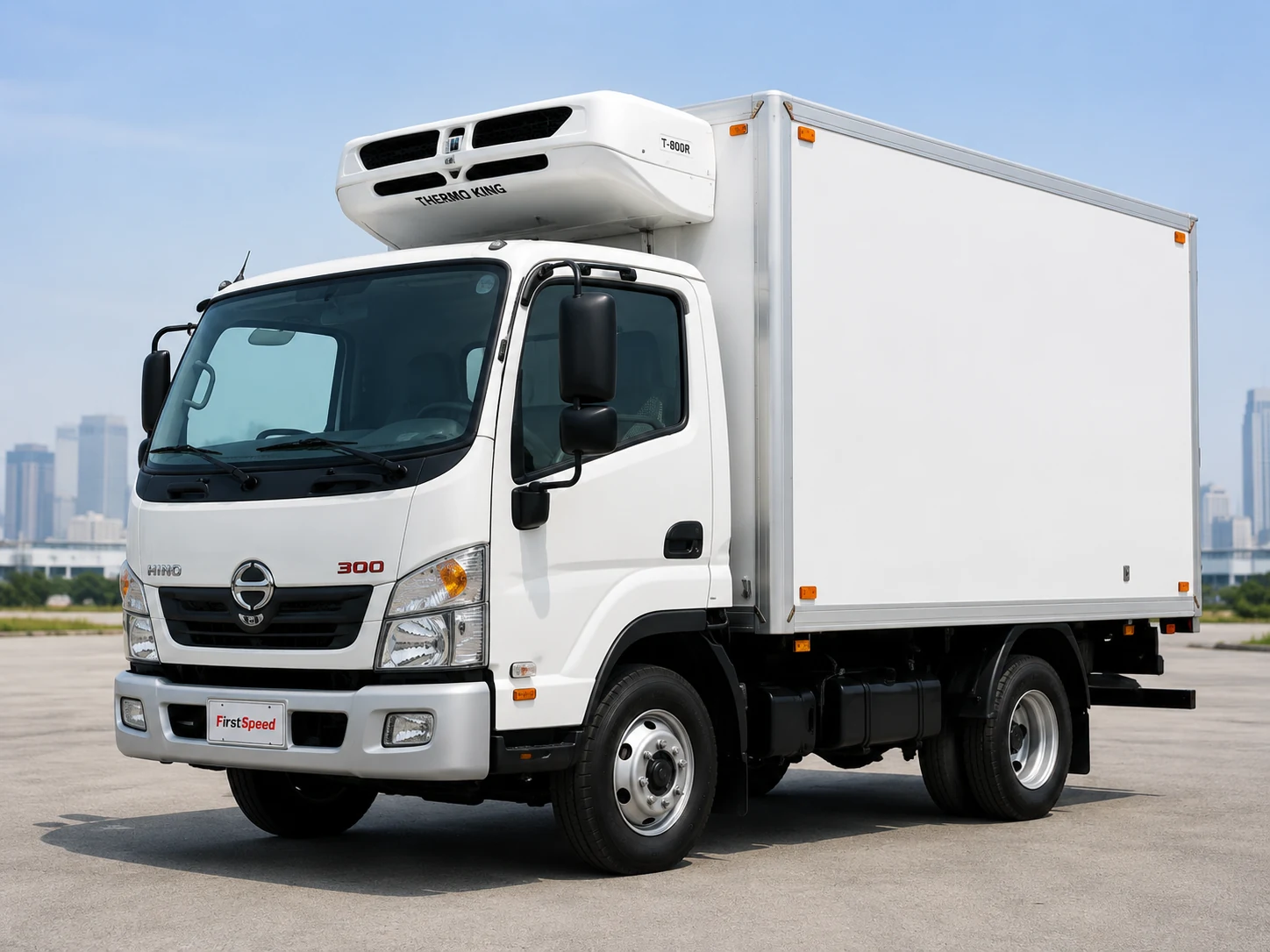
Frozen transport requires a more demanding thermal specification than ordinary chilled delivery, particularly in UAE ambient conditions and frequent-stop operations.
Freezer conversion starts with the duty cycle
The engineering should consider product loading temperature, target temperature, route duration, ambient heat, door openings and cargo volume. Those inputs influence insulation and refrigeration capacity.
Insulation and sealing are critical
A powerful refrigeration unit cannot compensate efficiently for weak insulation or poorly sealed doors. Body panels, flooring, joints and door seals need to work as one thermal envelope.
Applications for freezer vehicles
Frozen foods, ice cream, meat, seafood and other low-temperature cargo may require freezer-grade vehicle solutions. Requirements vary significantly by product and distribution pattern.
RFQ details that improve pricing accuracy
Include vehicle type, internal dimensions, cargo, temperature target, quantity, daily route and whether loading starts with already-frozen goods.
Frequently Asked Questions
What temperature can a freezer vehicle achieve?
The achievable operating temperature depends on the complete specification, including insulation, refrigeration capacity, ambient conditions and duty cycle.
Can a van be converted for frozen delivery?
Suitable vans can be assessed for freezer conversion, subject to payload, available space and the required thermal performance.
Is thicker insulation always better?
Insulation must be selected as part of the complete design; more thickness also affects cargo space and payload.